

-
Practice Tip Sheets for Careworkers Advance Care Planning Advanced Dementia Advanced Dementia Behavioural Changes After-Death Choices Aged Care Access and Assessment Anxiety Cachexia Sarcopenia and Anorexia Case Conferences Complementary Therapies Constipation Continuity of Care Culturally Responsive Care Communication Distress at the End of Life Dysphagia Dyspnoea End-of-Life Care Pathways Eye Care Faecal Incontinence First Australians Communication Frailty Grief and Loss among Older People Families and Residents Grief and Loss among Staff Myths about Morphine Nutrition and Hydration Opioid Analgesics Oral Care Pain Management Palliative Care People with Intellectual Disability Communication People with Specific Needs Person-Centred Care Psychosocial Assessment and Support Quality of Life Recognising Deterioration Respiratory Secretions Self-Care Signs of Imminent Death Skin and Wound Care Spiritual Care Supporting Families Talking about Dying Talking within the Aged Care Team Next Steps for Careworkers
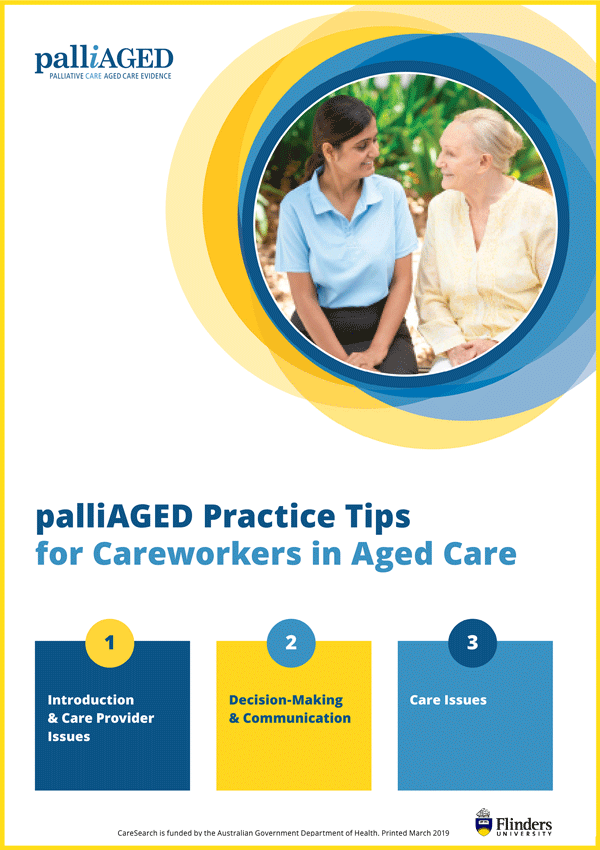
The palliAGED Practice Tip Sheets for careworkers in aged care contain information on palliative care for older people. The Tip Sheets cover what you need to know and what you can do across 42 topics.
View or print individual topics
Introduction and care provider challenges
Decision making and communication
- Advance Care Planning
- After Death Choices
- Case Conferences
- Continuity of Care
- Culturally Responsive Care – Communication
- End-of-Life Care Pathways
- First Australians – Communication
- People with Intellectual Disability – Communication
- Person-Centred Care
- Quality of Life with Change and Deterioration
- Supporting Families
- Talking About Dying
- Talking within the Aged Care Team
Care needs
- Advanced Dementia
- Advanced Dementia – Behavioural Changes
- Anxiety
- Cachexia, Sarcopenia and Anorexia
- Complementary Therapy
- Constipation
- Distress at the End of Life
- Dysphagia
- Dyspnoea
- Eye Care
- Faecal Incontinence
- Frailty
- Grief and Loss among Older People, Families and Residents
- Grief and Loss among Staff
- Myths about Morphine
- Nutrition and Hydration
- Opioid Analgesics
- Oral Care
- Pain Management
- People with Specific Needs
- Psychosocial Assessment and Support
- Recognising Deterioration
- Respiratory Secretions
- Signs of Imminent Death
- Skin and Wound Care
- Spiritual Care
- Next Steps for Careworkers
Page updated 23 July 2026
- Supporting Services
- palliAGED Products
- Practice Tip Sheets for Careworkers